Who leads social change matters
Shrochis, our Director of Impact and Influence, reflects on what our latest impact data tells us about who gets to lead social change.
By Shrochis Karki, Director of Impact & Influence
Social entrepreneurs are often driven by a passion for tackling the social challenges they see around them. Many also bring knowledge, insight, and experience rooted in those challenges.
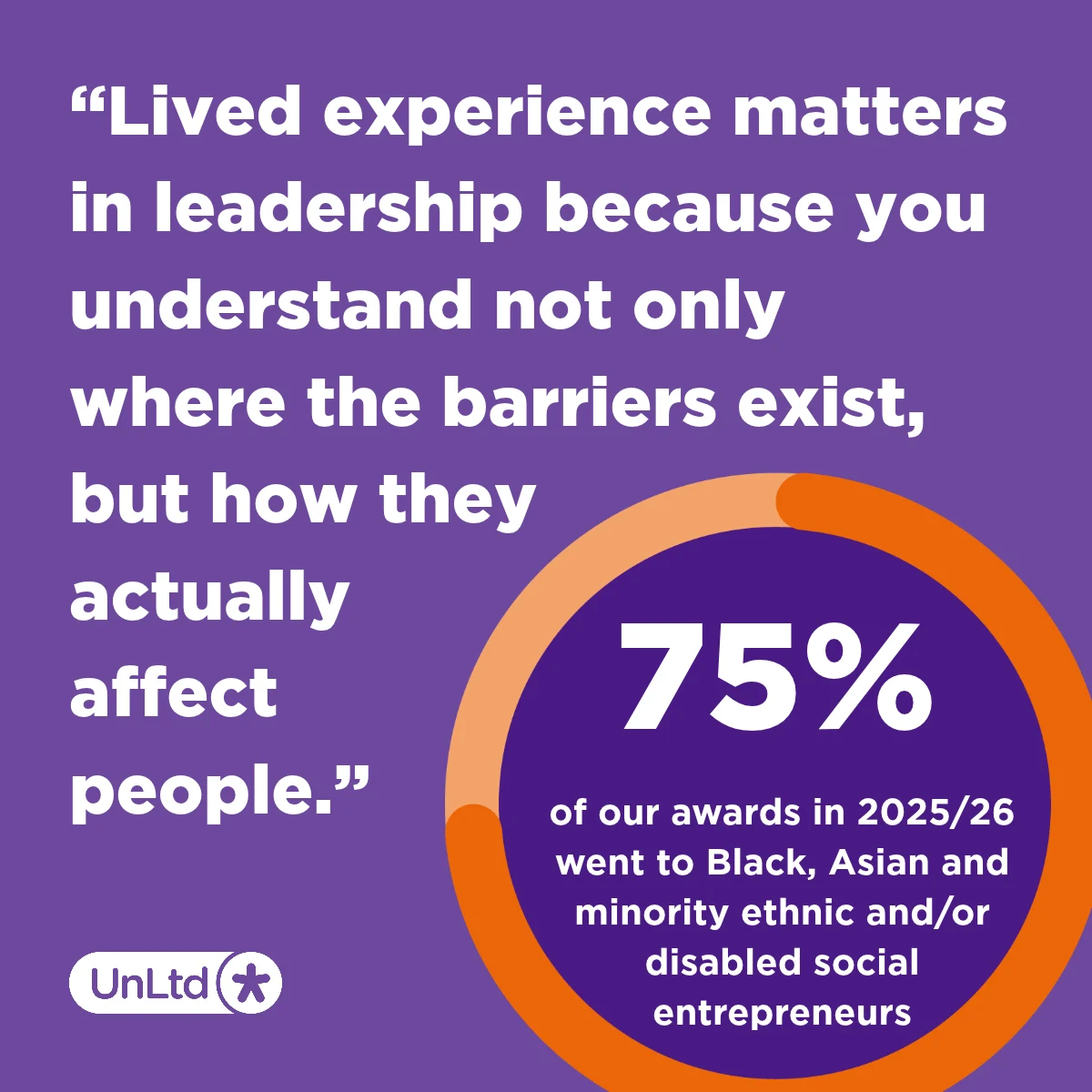
In 2020, UnLtd made a public commitment for at least 50% of our funding and support to go to social entrepreneurs who identify as disabled and/or come from a Black, Asian, or minority ethnic background. We have consistently met or exceeded that commitment, with 75% of our awards going to social entrepreneurs from these groups in 2025/26.
Lived experience can be a powerful asset Link to this section
Four fifths of social enterprises surveyed by Social Enterprise UK said they have at least one leader with lived experience of the social issues their organisation addresses. People who have experienced discrimination or social exclusion can bring valuable insight into what needs to change. That understanding can help them build trust and develop practical solutions shaped by the realities of the people and communities they seek to support.
One example is UnLtd Award Winner and musician Dionne Bennett, who founded Tân Cerdd to support Black artists in Wales in navigating a music industry that can be exclusionary and hard to get into.
“As a Black woman working in the music industry in Wales, I’ve experienced first-hand how challenging it can be to access opportunities, build networks, and progress professionally. Those experiences have shaped how I approach my work and the support I want to offer others,” she explains.
“I co-founded Tân Cerdd because I wanted to be the person I needed when I was coming through, someone who shares knowledge, opens doors, and helps Black artists and music creatives navigate an industry that can be difficult to access.”
Dionne Bennett’s story shows how lived experience, combined with sector knowledge and expertise, can bring valuable insight into entrenched problems. Her experience of the barriers facing Black artists has informed practical responses, including bursaries for emerging artists, stages at venues and festivals, and paid opportunities for Black artists and musicians.

Why inclusion targets matterLink to this section
Too often, the people with the insight and ideas to create change face significant barriers to accessing the funding, networks, and support they need to build their ventures.
The playing field is far from level. A 2024 follow-up to the Adebowale Commission report stated that 70% of ethnic minority-led social enterprises and 79% of Black-led social enterprises reported barriers to growth, compared with 62% overall. Just 28% of disabled-led organisations said suitable finance was sufficiently available to them.
That’s why we set clear inclusion targets and have consistently met or exceeded them over the last five years.
The targets hold us accountable for who we reach and who gets the opportunity to turn their ideas into action.
Our targets aren’t an end in themselves. They’re one way of making sure unequal access to opportunity doesn’t determine who gets the chance to lead and create change.
Unlocking potential Link to this section
Across 2025/26, we supported a total of 223 founders with a combination of grants, social investment, dedicated one-to-one support, workshops, peer support, mentoring, and pro-bono expertise.
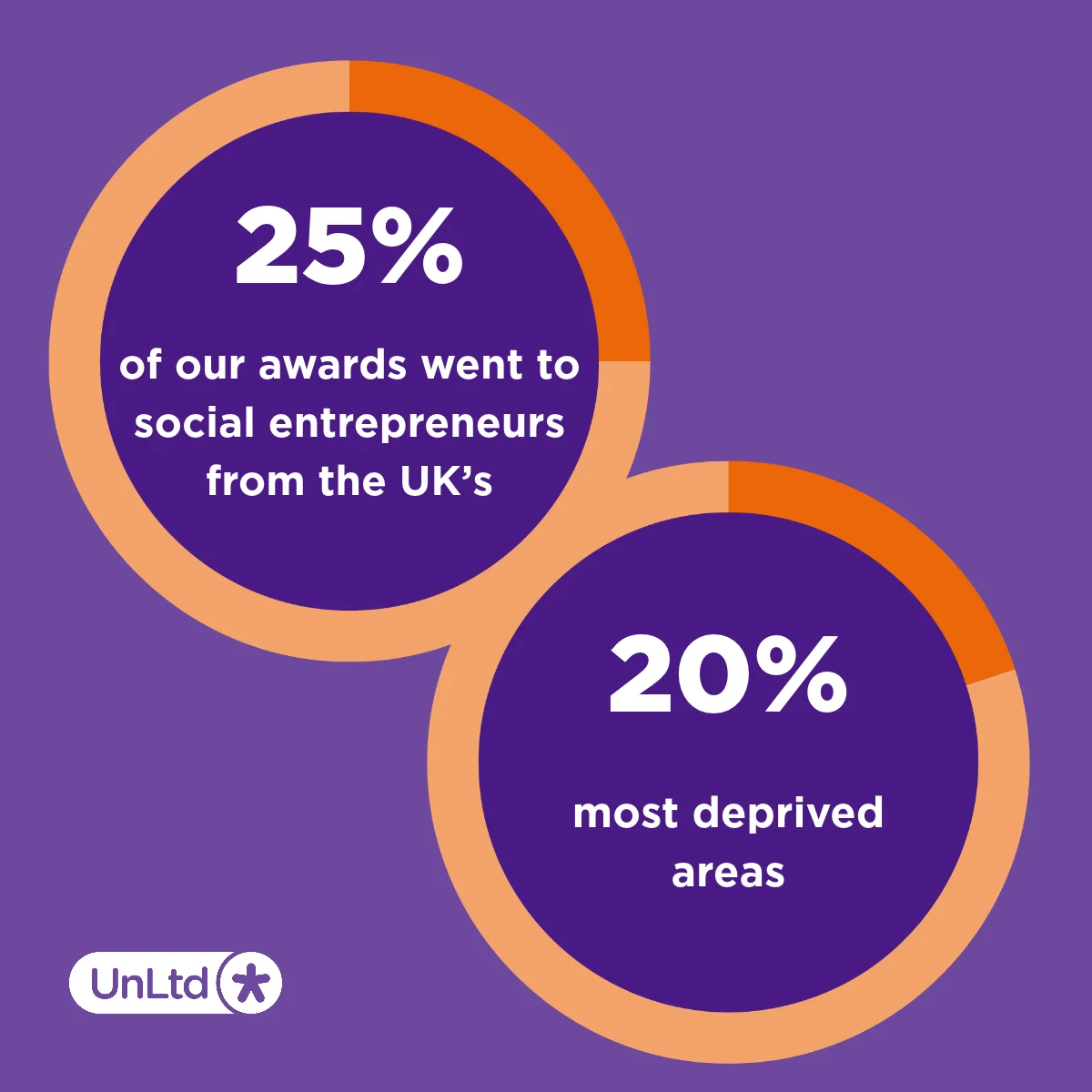
Just over 25% of our funding went to social entrepreneurs from the UK’s 20% most deprived areas.
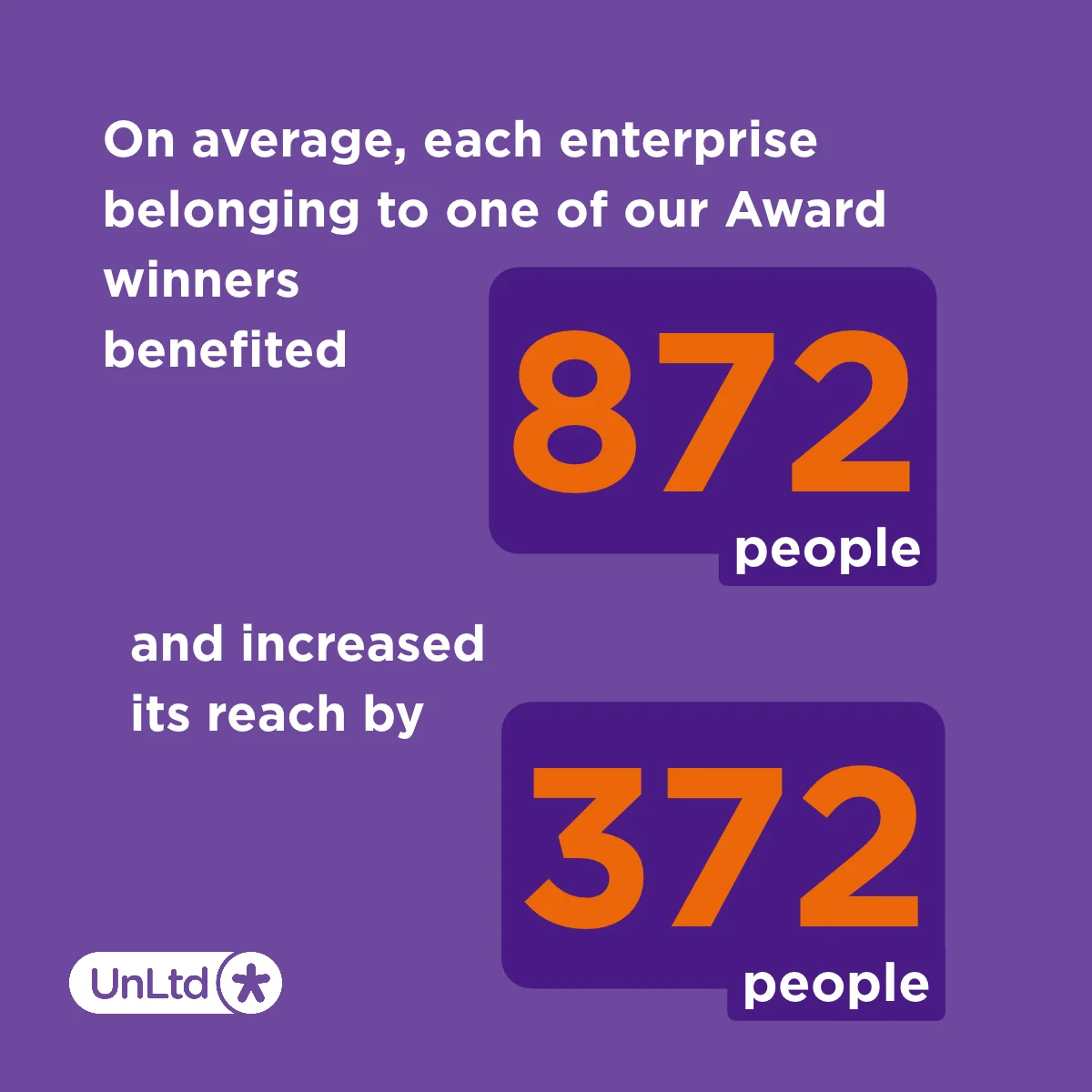
The social entrepreneurs we support are translating that backing into stronger ventures and wider impact. Among ventures completing support in 2025/26, average turnover increased by £37,855 and an average of 1.5 new jobs were created. Each venture benefited an average of 872 people and increased its reach by 372 people.
Behind these numbers are very different ventures tackling very different challenges: Dionne Bennett creating opportunities for Black musicians in Wales; Niketa Sanderson-Gillard helping more children find stable, loving foster homes; and Julian Hall helping young people from marginalised communities develop the skills and confidence to pursue entrepreneurship and employment.
The evidence also gives us an indication of how social entrepreneurs themselves are developing. After completing their funding and support programmes with us:
- 96% of award winners felt confident they could contribute to social change
- 90% felt able to overcome difficulties leading their venture
- 80% believed they could grow and sustain their business.
This is what we want our funding and support to unlock: stronger social entrepreneurs, more sustainable ventures, and greater impact for the people and communities they serve.
Looking forwardLink to this section
Our latest impact data gives us an encouraging picture. The challenge now is to build on it.
We need to move beyond asking who gets the opportunity to start a social venture and consider who gets the opportunity to sustain and grow their venture, access investment, and scale their impact.
That thinking underpins our Pathways to Growth strategy: creating a clearer and more connected route through different stages of venture development, so social entrepreneurs can access the right support and finance as their ventures develop and grow.
Who leads social change shapes what is possible. Our commitment is to ensure more social entrepreneurs have the opportunity and backing to take their ventures, and their impact, further.