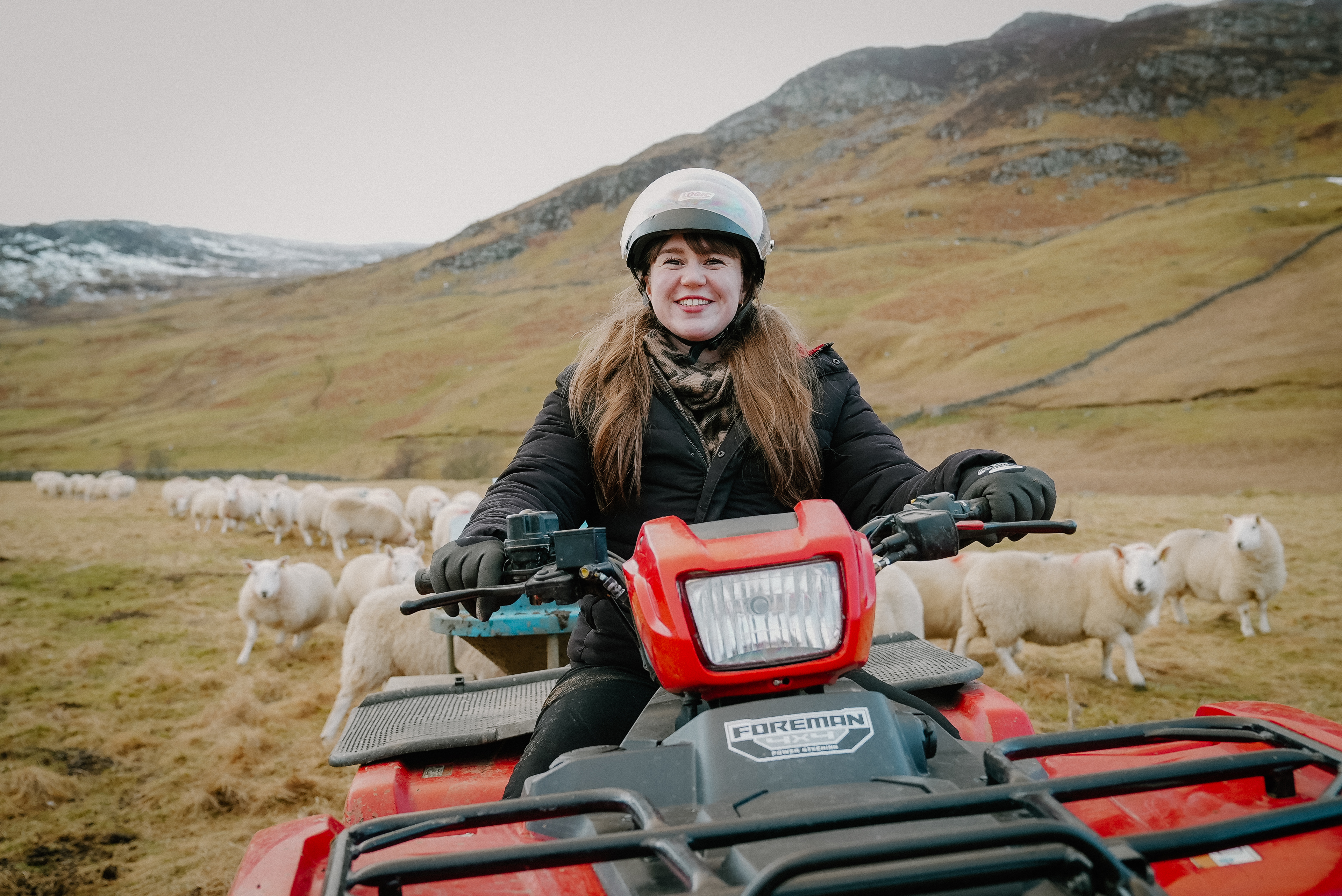
Introducing Helen Stewart, founder of Fair Feast
Connecting environmental action with community need, to support people, place and planet.
By Nicola Curtis, Head of External Affairs
When Helen Stewart took over her family farm in Perthshire, she faced a serious environmental challenge posed by deer overpopulation.
At the same time, food banks across the region were struggling to provide enough nutritious food for the people who relied on them. Helen began to realise that one challenge might help provide a practical solution to the other.
The scale of the issue on her Pitlochry farm quickly became clear. “When I first took on the deer, we had about 650 of them. When the farm was surveyed, we should have had about 50,” she said.
The numbers weren’t just surprising, they were alarming. The land the red deer roam is predominantly designated as SSSI – a Site of Special Scientific Interest – because of its extremely high biodiversity. Overpopulations of deer trample peatland, damage fragile habitats and release carbon into the atmosphere, contributing to global warming.
Helen was advised that even when deer were culled as part of responsible wildlife management, a significant proportion of the meat could go to waste. Around 80% of deer in Scotland go through processing in October alone. Facilities are seasonal, capacity is limited, and when culls happen outside of that window, there often isn’t enough space to take all the carcasses.
“People were telling me if you shoot 50 a weekend, the butcher might pick up 20, if that. The rest you just kind of throw away.”
For a farmer and food producer, that idea simply did not sit right.
“It’s such nutritious meat. Venison has iron, and all these vitamins that support its absorption, and is second only to oysters in zinc. It supports brain health and nervous system regulation. I just thought it was fantastic meat. The idea of having to throw it away - I just knew I wasn’t going to do that.”
She reached out to local food banks and soon met Jackie Mahoney, who runs a food bank in Auchterarder and is now on Fair Feast’s board.
Helen said: “It’s been really inspiring to meet these people who run food banks. They are amazingly strong and passionate people who care deeply about their community and have taken action.”
Jackie had long been trying to bring more local, nutritious food – especially game – into food bank supplies, concerned about the quality and variety of what was typically available.
Together, they began visiting food banks and community larders. What they found was sobering.
“We found the only protein available might be tinned hot dogs or frozen chicken nuggets occasionally,” she says. “We were really questioning the nutrition available to those in food scarcity. What if your child was in that situation – would they actually have the protein they need to grow?”
This was the starting point for Helen’s social enterprise.
Now Fair Feast processes the meat from the surplus deer on her farm land, selling a portion of venison to the public to fund the processing and donation of the rest to those in need.
The venison is hung for a shorter time than traditionally for a milder flavour and is prepared in accessible forms such as mince, stew, burgers and sausages so that it can easily be used in everyday meals.
“Our whole idea is that it should fit into people’s existing diets, not be an acquired taste. We’re just trying to get something light and nutritious out to folk.”
The need for support has been rising sharply due to the cost-of-living crisis
“Food banks are at an all-time high for demand,” Helen said. “Sometimes we are dropping off 100 packs of venison and it feels like a drop in the ocean. They will all be gone within a day or two. I can see a queue of people waiting to go into the community larder, and I’m looking at the back of it, thinking there won’t even be any left by the time they get in.
“And those people in the queue - I know them. When people talk about people using food banks or living with food scarcity, they never actually imagine it as people they know.
“In rural areas, everyday costs can quickly spiral. If your car stops working and you need it to get to work, you pretty much need to fix the car - even if it means you can’t afford your food bill.”
Fair Feast now works with several food banks and community larders, including in Perth, Bankfoot, Auchterarder and Aberfeldy.
In its first year, the social enterprise donated two tonnes of venison. It took a while for the scale of that impact to truly register.
“It didn’t really sink in until recently. I sat down with visitors at the deer larder, sharing a venison burger for lunch and thought how delicious and nourishing it was. We have produced the equivalent of about 20,000 burgers. That’s an awful lot of people we have helped.”
Seeing the level of need has strengthened Helen’s determination to grow Fair Feast so it can reach more people.
“If we can donate tens of thousands of meals from just one farm, imagine what could happen if that was rolled out across Scotland,” she said.
To help make the model sustainable year-round, Helen is now opening a social enterprise butcher shop on the high street in Pitlochry. As well as selling meat locally, the shop will enable Fair Feast to redirect short-dated products and surplus food to its partner food banks and community larders, helping to increase donations and reduce waste.
“It means we can stabilise the donations through the year,” she says. “When venison season comes in winter, when food banks are busiest, we can increase donations.”
All profits from the enterprise will be reinvested into Fair Feast’s environmental and social ambitions. Reducing the number of deer responsibly is a long-term process. “It’s probably going to be a ten-year project just to get things roughly in line with where they should be.”
Setting all this up has required more than vision. The practicalities of running a food business to high standards are demanding.
Support from UnLtd has been critical in Fair Feast’s first year. Helen admitted she didn’t even know what a social enterprise was when she started. “It felt like part business, part charity – what is this mysterious thing?” she laughed. Living in a rural, relatively isolated area, being able to reach out for support was “hugely, hugely helpful”, both financially and emotionally.
Helen received an £8,000 MAT award from UnLtd, followed by a £7,500 Continuous Support Award.
The funding helped Fair Feast purchase essential equipment such as a vacuum packing machine, and systems to ensure everything is weighed, tracked and compliant. This extended the shelf life of donated meat and made large-scale processing onsite possible.
“It helped us get over a big hurdle,” Helen explains. “The startup costs were incredibly high."
Just as importantly, her UnLtd support manager Thomas has been a sounding board and guide. “When he doesn’t know the answer, he always knows who does,” she says. “It’s always just very supportive and validating of what I’m thinking.”
For Helen, Fair Feast is about more than solving a problem on her farm. It is about rethinking how food systems work and ensuring that good food reaches the people who need it most.
“I get a lot of people being very dismissive, saying, ‘Oh, well, people should just work harder,’” she said. “Lots of people we support do work, work a lot. It is just that expenses are really high. And what do you do then?
“When we have food surpluses and people who are hungry, it really becomes a matter of redistribution.”